by Hazel Frans
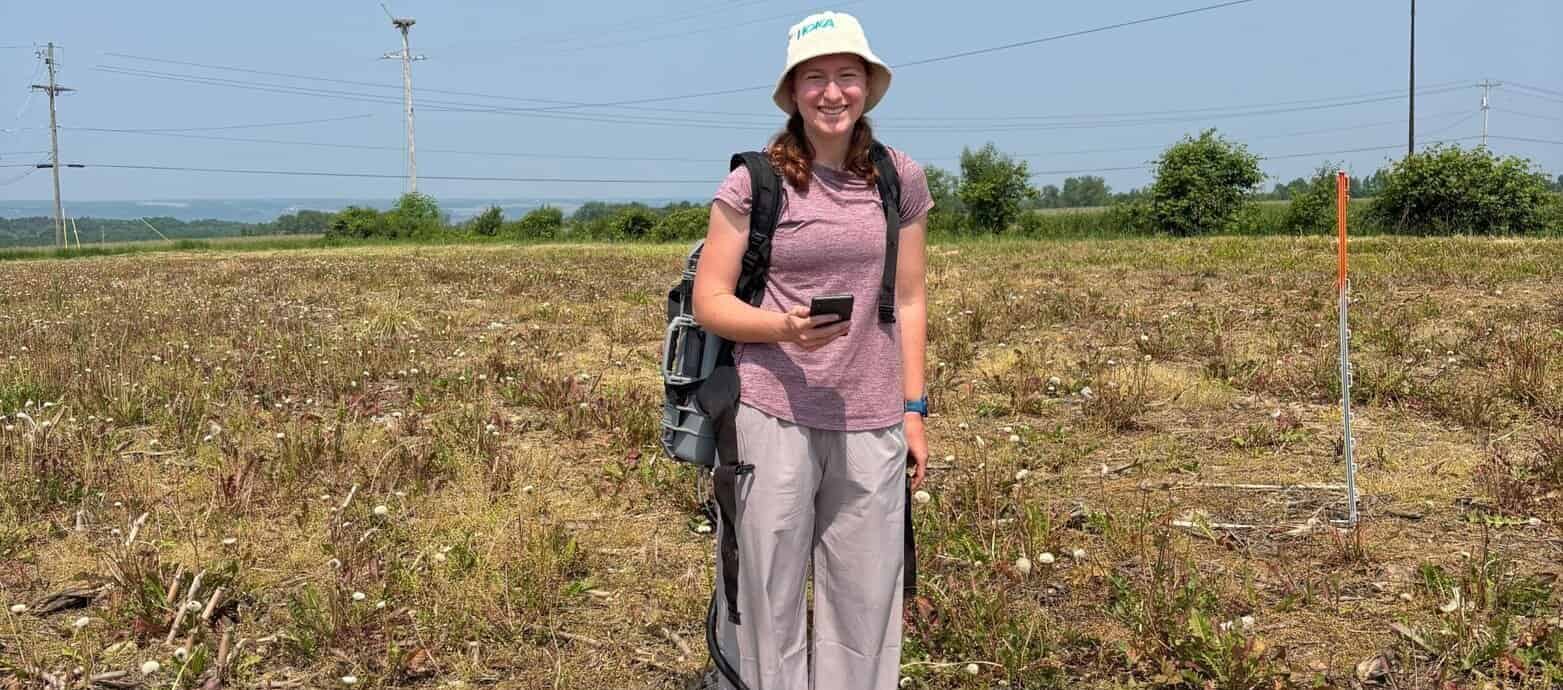
Hazel Frans, originally from Overland Park, Kansas, is a Senior at Fort Hays State University. She was a 2025 summer intern at the Boyce Thompson Institute and Cornell University Plant Genome REU.
In February, I was making lunch when a notification on my watch brought me to my knees. I called my family, with tears in my eyes and a shaky voice, to let them know I was heading to New York for the summer – to an Ivy League no less! The email came from the Boyce Thompson Institute (BTI) and Cornell University Plant Genome Research Experience for Undergraduates (REU), a 10-week internship based in Ithaca, New York.
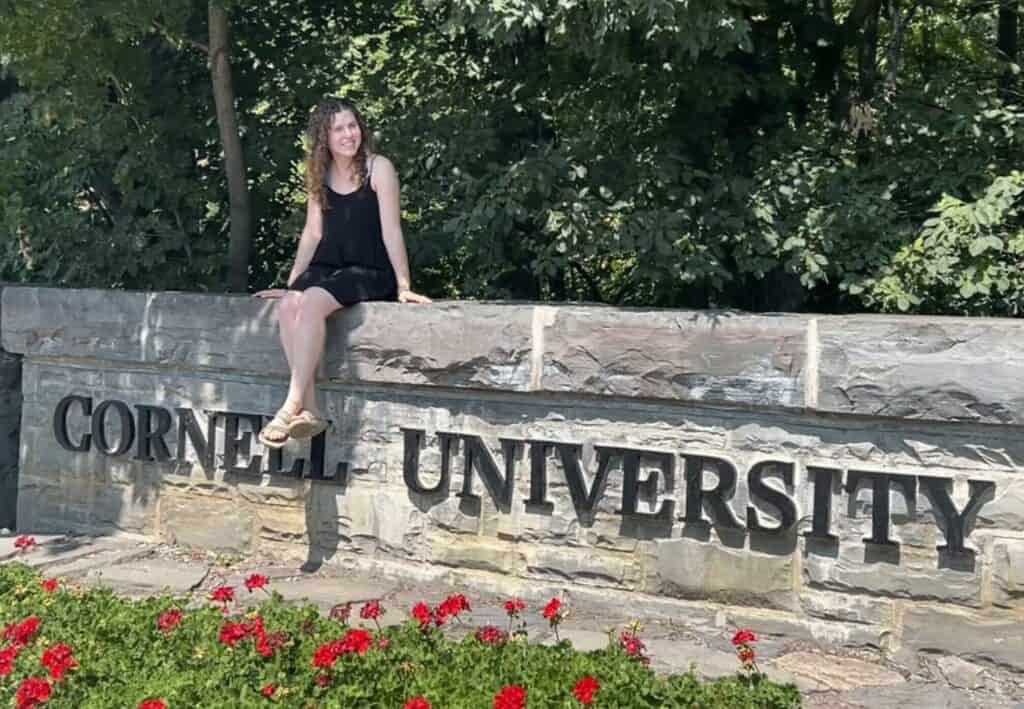
Just a few months after my acceptance, I was on the plane headed towards Ithaca. My suitcases were packed with my lab coat and plenty of long pants, prepared for the molecular biology bench work dress code. As I arrived on the campus of Cornell University, I couldn’t help but compare the waterfalls and lush vegetation to the flat, windy town of Hays, Kansas. The next day, I met my REU cohort – over thirty students from across the world who all shared a passion for plant biology.
Prior to orientation, I was placed under the mentorship of Dr. Jian Hua and post-doc Dr. Veronica Perez. The project I currently work on is characterizing a few ribosomal protein gene families in relation to cold tolerance in Arabidopsis thaliana. Arabidopsis is a plant in the Brassicaceae family (think mustard, broccoli, cabbage) that has been studied as a model organism by plant biologists for many decades. Along with an extensively annotated genome, Arabidopsis has many research perks: a short 45-day life cycle, small size, self pollination, and high volume of seeds produced per healthy plant. The genes we studied were originally found to react differently when expressed to the cold in Zea mays (maize). Characterization of these genes through the lens of cold tolerance is important – this knowledge can be applied to crops and other plants to help them grow better in unpredictable weather.
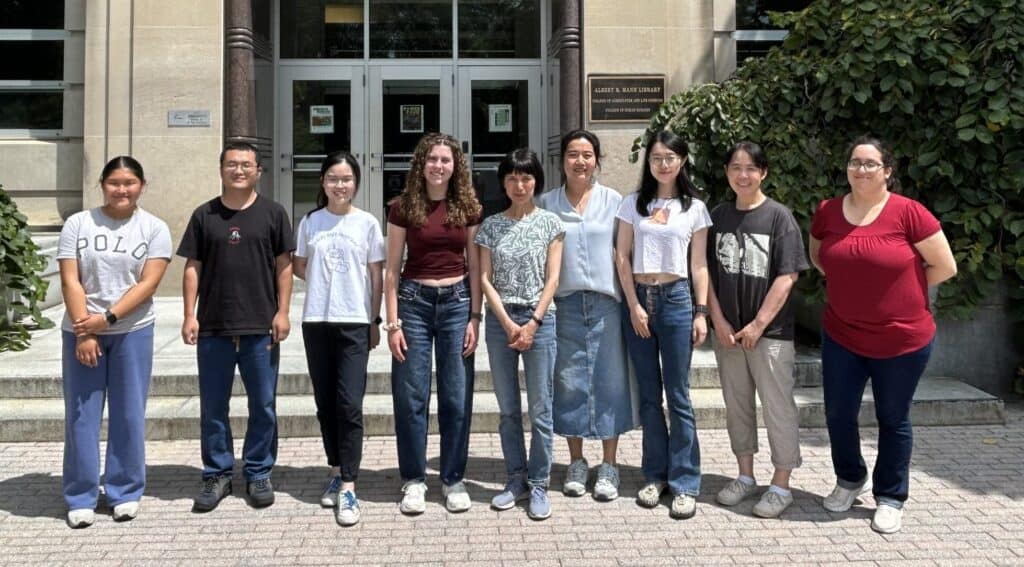
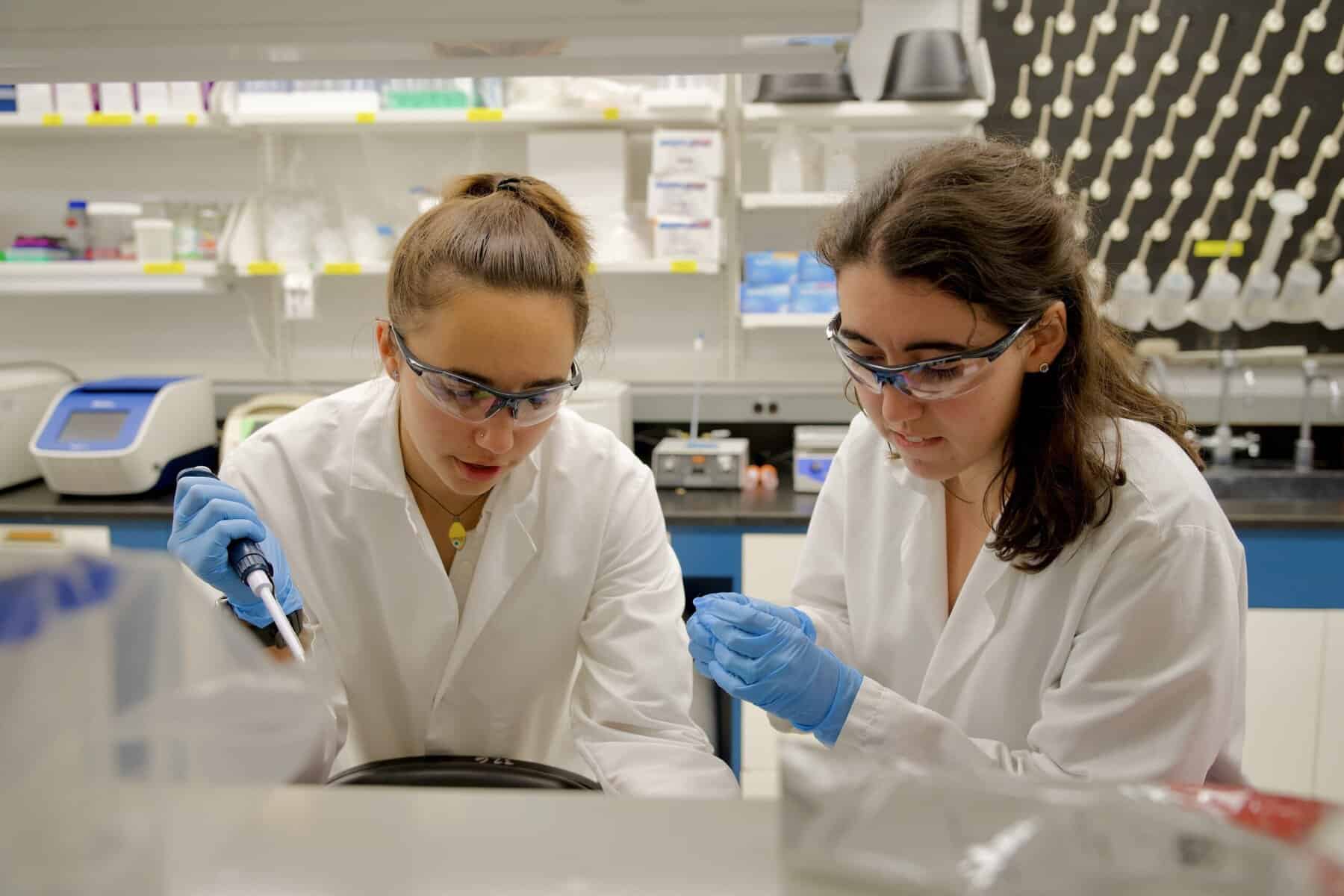
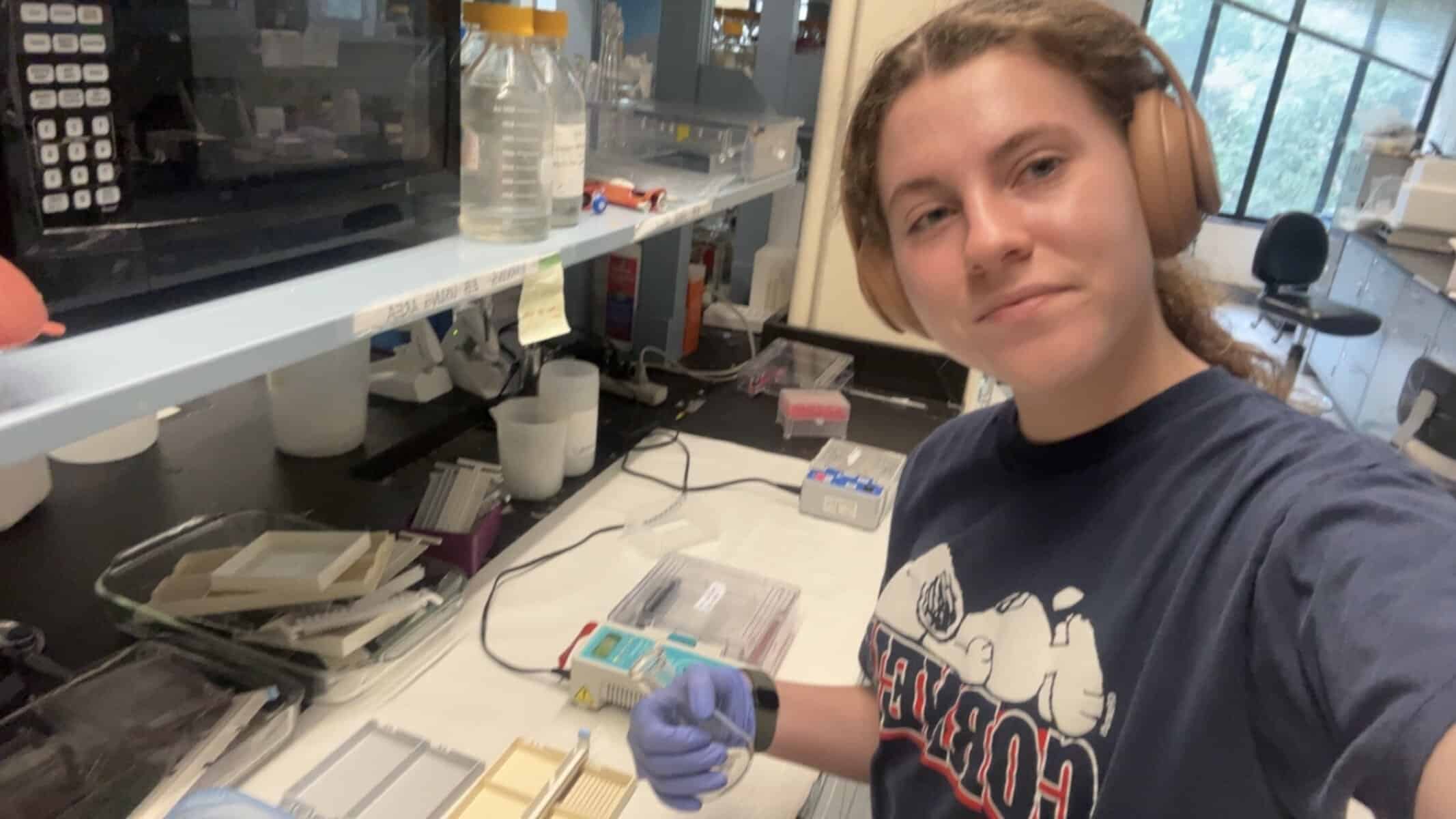
As the summer has gone by, I’ve fallen into routine. Each morning, I wake up, get ready for work, and catch the TCAT 81 bus bound toward Emerson Hall. On Monday mornings, I attend the Hua Lab meeting, where lab members present their research and relevant articles. Tuesdays are spent 9 – 5 in the lab, running PCR reactions, pouring gels, and plating tiny Arabidopsis seeds for germination.
BTI hosts a seminar each Wednesday, where a Principal Investigator (PI) presents their journey in academia and the impacts of their research. These seminars are followed by a catered lunch, and I have had the opportunity to speak directly with the presenting PIs to ask follow up questions from their talk. On Thursday mornings, I attended an Introduction to Bioinformatics Course taught by the BTI Computational Biology Center director Dr. Adrian Powell. For five weeks, Dr. Powell explained how UNIX and R programming can be utilized to understand large datasets of DNA and genes. Fridays tend to mirror Tuesdays, with the occasional professional development activity to keep things interesting.
At 5 o’clock each day, I walk back to my dorm, Ganędagǫ Hall. The Cornell campus has beautiful wildlife and waterfalls that bring a serenity to my evening walks. I often find myself slowing down to absorb the waterfront views on the bridge to North Campus, forgetting the weeks I spent worrying about getting into an REU. Once I get back, I grab dinner with my friends, at the Morrison Dining Hall or the restaurants around Ithaca – I would recommend the Bickering Twins downtown, they have incredible authentic Latin food!
My favorite activity that the BTI REU coordinators planned was a tour of the Cornell High Energy Synchrotron Source (CHESS) particle accelerator located forty feet below campus! About fifteen of the REU students signed up to tour the facility and learn about the projects there. We were able to see the control room, walk down to the actual accelerator, and view the sites where they were constructing new labs. One of these labs, called XLEAP, is under development, and will focus on plant-related particle experiments. These include using positrons to map the specific elements in plant tissue and image the tissue fluorescently – which has incredible applications to nutrition, agriculture, and carbon cycling!
Ithaca has many amazing weekend activities in the summer: the farmer’s market, exploring Collegetown, getting ice cream, and swimming in Cayuga Lake.
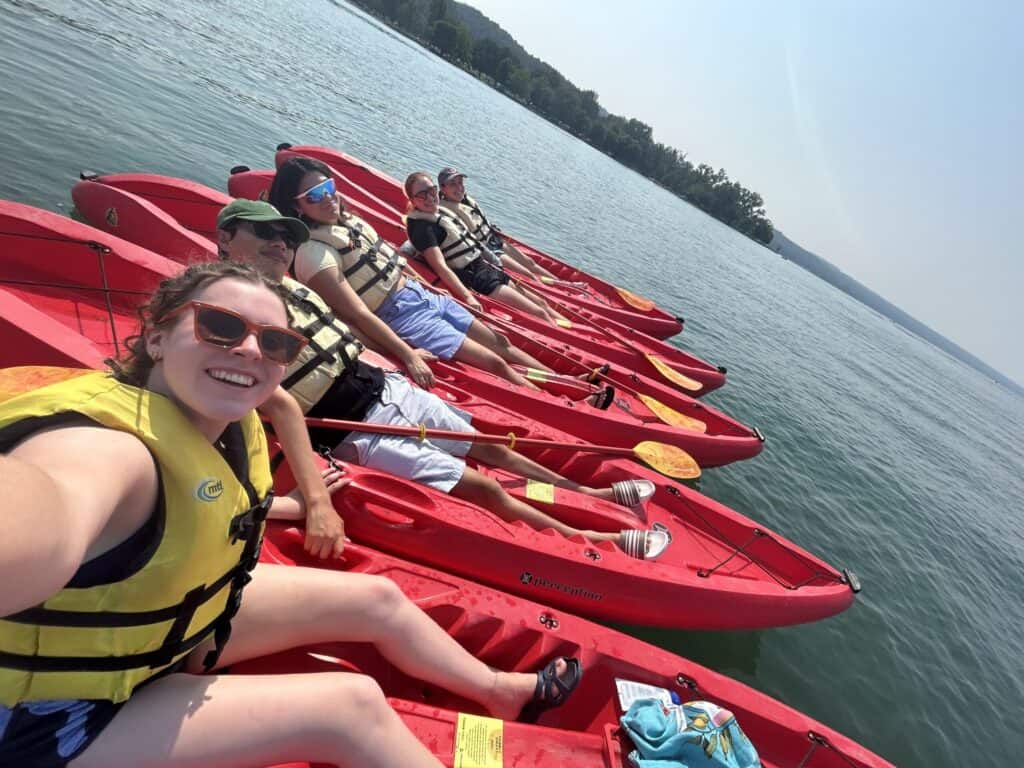
My friends and I have also explored Syracuse University. I even traveled to New York City and watched a baseball game at Yankee Stadium!
As the program continues, I still have experiments to manage, data to analyze, seminars to attend, and a beautiful town to explore. In a few weeks, I will present my research at the George and Helen Kohut Symposium, where I can practice my public speaking, scientific communication, and networking skills. This symposium serves as the REU’s crescendo, just one day before I will head back to my hometown of Overland Park, KS. My beloved undergraduate institution, Fort Hays State University, lacks the funding for research that is normal at an R-1 research institution. As I apply to graduate school this fall, the BTI & Cornell REU will serve as a testament to my love of discovery, commitment to excellence, and excitement to explore new places and ideas.