


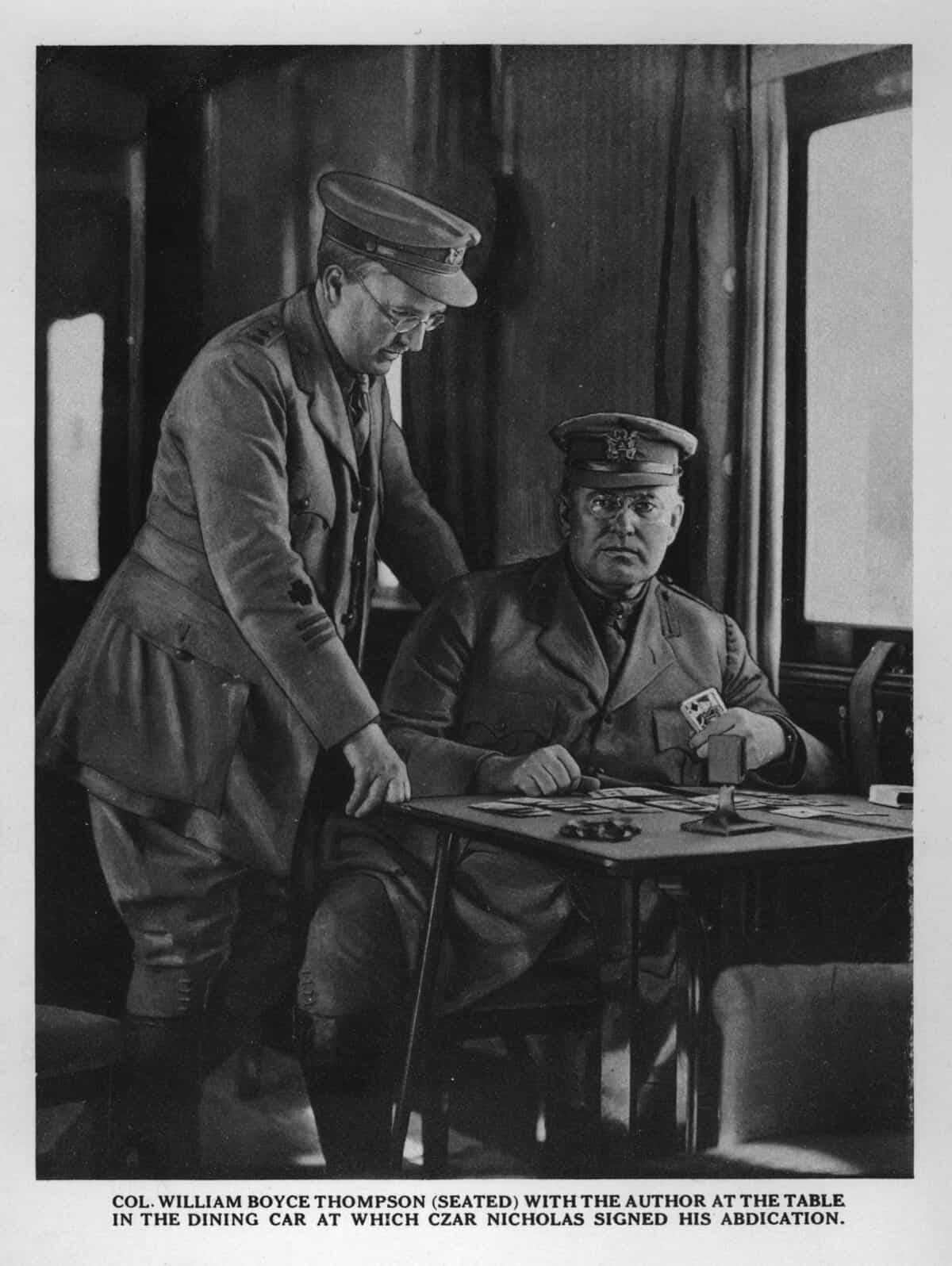
Thompson’s life is chronicled in his 1935 biography The Magnate. He visited Russia in 1917, just after the overthrow of the monarchy, when civil war was raging and starvation was rampant. Thompson was a member of an American Red Cross relief mission that was present during the political unrest after the abdication of the czar, the interim government of Kerensky, and rise of Lenin and Trotsky. He was awarded the honorary title of colonel by the American Red Cross.
The mission saw firsthand the suffering of the people and the inability of the social democratic government headed by Alexander Kerensky to feed the hungry. Although Thompson added more than $1 million of his own to the relief funds provided by the U.S. government, he was unable to convince President Woodrow Wilson to do more. Soon after the Americans had returned home, the Kerensky government fell and the Bolsheviks came to power. Thompson’s hopes for a prosperous democracy in Russia were ended.
The Russian experience convinced him that agriculture, food supply, and social justice are linked. World political stability in the future, he prophesied, would depend on the availability of adequate food. This conviction, along with his faith in science, helped to shape his next philanthropic project. In 1920 he decided to establish an institute for plant research. Its purpose would be to study “why and how plants grow, why they languish or thrive, how their diseases may be conquered, how their development may be stimulated by the regulation of the elements which contribute to their life.”

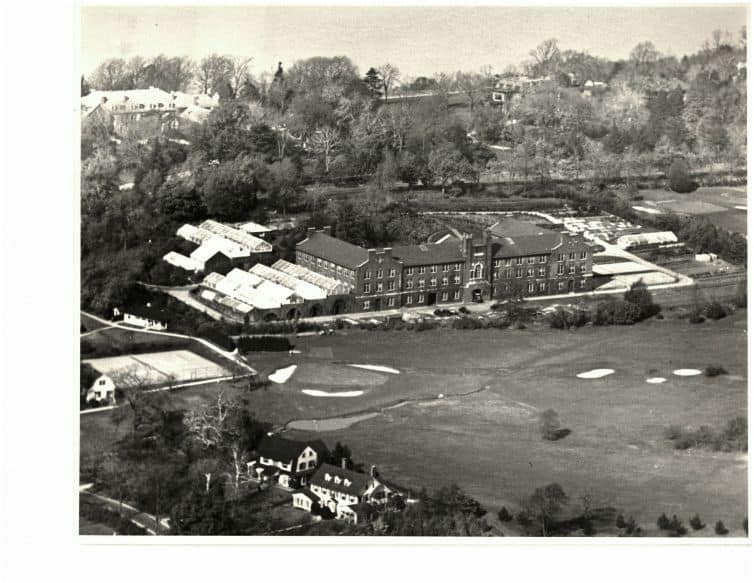
By 1924 an interdisciplinary team of academic researchers had been assembled, and the facilities were finished. Many luminaries attended the dedication ceremonies on September 24 for the Boyce Thompson Institute for Plant Research (named not for Thompson himself, but for his parents Anne Boyce Thompson and William Thompson).
William Crocker, an associate professor of plant physiology at the University of Chicago, became the institute’s first managing director. He, Thompson, and other academic advisers spent several years planning the institute. Herbert H. Whetzel of Cornell urged Thompson to build the institute at a university so it could cooperate with university research programs, but Thompson wanted to be personally involved, and the institute was built across the street from his mansion in Yonkers, New York.

BTI is an independent, nonprofit institution affiliated with Cornell University. While BTI maintains an identity with its own mission, values, and endowment, its location on the campus facilitates a collaborative association with Cornell.
The desire that the Institute be associated with a university traces back to its founding, when William Boyce Thompson had his vision of creating an institution that he hoped would be to plant science what the Rockefeller Institute was to human and animal science. As a start, he asked advice from a number of prominent scientists.
Among them was H. H. Whetzel, a professor of plant pathology at Cornell University, who suggested that this new institute be located in association with a university, preferably Cornell, but Thompson, although aware of the advantages of a university affiliation, had already decided it would be built across the street from his mansion, “Alder,” where he could observe its construction and operation. Little did he know that Whetzel’s proposal would someday become a reality.
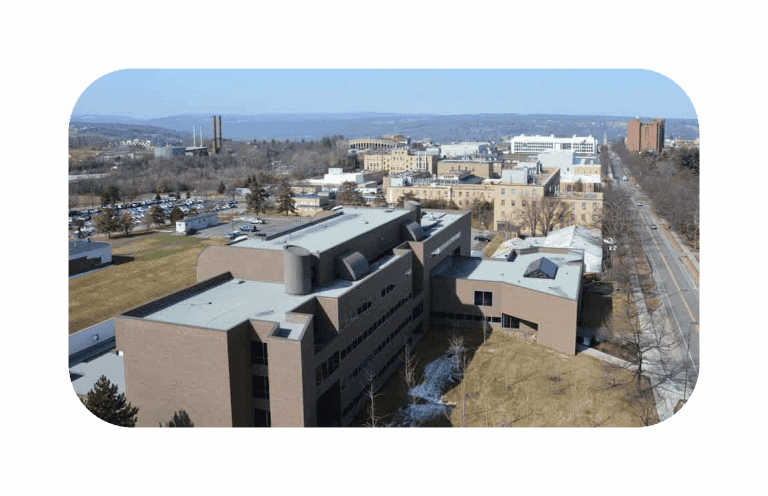 BTI is an independent, nonprofit institution affiliated with Cornell University and located on its Ithaca campus, near the College of Veterinary Medicine on Tower Road. A map is available here and information about visiting Cornell is available here.
By the early 1970s, BTI had been a recognized leader in agricultural and environmental scientific research for many years. BTI became interested in building stronger ties with a major research university. To keep BTI in New York State, Ithaca community leaders, the New York State legislature, and BTI and Cornell leadership worked together to bring the institute to Cornell University. In 1974, $8.5 million was proposed for construction of BTI-designated laboratories and greenhouse facilities on campus at Cornell University. BTI accepted the offer from New York State, the building was finished in 1978, and BTI headquarters relocated from Yonkers to Ithaca.
Cornell has a number of affiliations with independent institutes and programs, all of which have their own agreements with the university. BTI’s relationship with Cornell was born from a mutual interest in developing, among other things, a base of knowledge relating to problems in resource production and management. While BTI maintains an identity as an independent nonprofit organization with its own mission, values, and endowment, its location on university campus facilitates a collaborative association with Cornell’s New York State College of Agriculture and Life Sciences (CALS). A number of BTI research scientists are adjunct, assistant, associate, and senior professors at Cornell in areas such as plant pathology, plant biology, entomology, plant breeding and genetics, molecular biology and genetics, and chemistry and chemical biology. Additionally, many of the undergraduate and all of the graduate students working in BTI laboratories are enrolled in degree programs at Cornell.